Table of Contents
Learning how to choose a kitchen sink is one of the most important decisions you’ll make during a kitchen renovation. After years of helping hundreds of homeowners design their kitchens, I’ve learned that the perfect sink isn’t the most expensive one—it’s the one that matches how you cook, clean, and live every day.
Today, the three most popular kitchen sink materials are stainless steel, granite composite, and fireclay. Each has its own advantages, and understanding the differences will help you choose a sink you’ll enjoy using every d
After years of helping couples plan their kitchens, I’ve noticed something surprising: most people spend more time thoughtfully choosing their kitchen sink than they do choosing their faucet or even their countertop. It might seem like a small decision, but the sink is one of the most-used features in the entire kitchen — and the “perfect” sink is different for every household. The right choice always comes down to one thing: how you actually use your sink.ngle Bowl vs. Double Bowl Kitchen Sink
Knowing how to choose a kitchen sink starts with understanding how you use your kitchen every day. The right material, bowl configuration, and installation type can make cooking and cleaning much more enjoyable.
The first big decision is bowl configuration, and it really comes down to habits.
Double bowl sinks are ideal if you:
- Like washing fruits and vegetables separately from dishes — a small-and-large double bowl setup gives you one dedicated bowl for produce and one larger bowl for dishes
- Prefer washing dishes in one side and drying/rinsing in the other — a 50/50 double bowl sink works well here, since both sides are equal in size
Single bowl sinks are ideal if you:
- Want a clean, minimalist, modern look — single bowl sinks have become increasingly popular as minimalist kitchen design trends grow
- Regularly wash larger pots and pans that need open, uninterrupted space
A hybrid option worth knowing: some sinks are designed as a double bowl with a low center divider. This gives you the visual and functional benefit of two bowls, but when you need to wash something large, the short divider lets the sink function almost like a single large basin.
The Drain Placement Problem (Something Most People Don’t Know)
Here’s a detail I always make sure my clients understand before they decide: drain placement affects how easy your sink is to keep clean.
- A 32-inch single bowl sink typically has one drain, either centered or offset to one side
- After washing dishes, foam and small food particles tend to drift away from the drain and get stuck in far corners of the basin — meaning you’ll likely need to do a quick extra wipe-down after each use
- This issue is even more noticeable with an off-center drain in a single bowl sink
- Double bowl sinks avoid this problem almost entirely, since each bowl has its own separate drain directly underneath it
Some brands design single bowl sinks with a slight slope toward the drain to help with this — but since the slope has to stay minimal for the sink to sit flat, the drainage issue is usually still noticeable to some degree.
Sink Corner Styles: What’s Actually Popular Right Now
There are three common corner radius styles for kitchen sinks:
- Traditional fully rounded corners — less common in main kitchen renovations today; still occasionally used in basement or secondary kitchens
- 10mm radius corners — the most popular choice for main kitchens right now, offering a clean, modern, almost-square look while still being easy to clean thanks to the slight curve
- 0 radius (fully square) corners — a sharp, fully squared look that’s less popular, mainly because the tight corners are noticeably harder to clean
Sink Ledges and Workstation Features
Some sink brands build in a small integrated ledge, designed to hold a cutting board, colander, or drying rack directly over the basin. This is especially useful if your kitchen has limited counter space, since it effectively turns part of the sink into extra usable workspace.
How to Measure for the Right Kitchen Sink Size
Another important part of how to choose a kitchen sink is making sure you select the correct size for your sink base cabinet. Before choosing your new sink, always measure your sink base cabinet first. A few rules of thumb:
- Your sink should be 1½” to 2″ smaller than your base cabinet’s exterior width at minimum, since the interior cabinet opening is typically about 1.5″ smaller than the outer cabinet measurement
- Most kitchen sinks are 8″ to 10″ deep
- Add approximately ¾” to your depth calculation to account for standard stone countertop thickness
Undermount vs. Top Mount Kitchen Sinks
In today’s renovations, roughly 99% of homeowners choose undermount sinks. Top mount (drop-in) sinks are typically only used when the countertop material is laminate rather than natural or engineered stone, since undermount installation requires a stone or solid-surface edge to seal against.
Don’t Overlook the Drain Strainer
One small detail that makes a big daily difference: always choose a sink with a drain basket strainer. A kitchen sink with a strainer catches food waste and prevents clogs, while a sink without one allows debris to flow freely into your plumbing — leading to far more frequent clogs and buildup over time. It’s a small feature, but one our clients consistently tell us they’re grateful for after living with it.
Should You Add a Sink Grid?
Whether a bottom sink grid is worth adding also depends on your habits. Grids help:
- Protect the sink surface from scratches
- Create an elevated surface for drying fruits, vegetables, or dishes without them sitting directly in standing water
If you tend to wash produce often or want extra scratch protection, a grid is a worthwhile add-on.
How to Choose a Kitchen Sink Material
One of the biggest parts of how to choose a kitchen sink is selecting the right material. While there are many options available, stainless steel, granite composite, and fireclay remain the three most popular choices for modern kitchens. Each material offers different advantages, and understanding how they perform in everyday use will help you make a confident decision.
The best kitchen sink material isn’t simply the most expensive one—it’s the one that best matches your cooking habits, cleaning routine, and the overall style of your kitchen.
Stainless Steel Kitchen Sinks
Stainless steel has been the most popular kitchen sink material in North America for decades. It’s lightweight, durable, affordable, and complements almost every kitchen style, from traditional to contemporary.
For homeowners looking for a heavy-duty kitchen sink, a 16-gauge stainless steel sink is usually a better investment than an 18-gauge sink. The lower the gauge number, the thicker the steel.
Compared to 18-gauge sinks, a quality 16-gauge sink offers:
- Better resistance to dents from heavy cookware
- Less vibration during everyday use
- A stronger, more solid feel
- Greater long-term durability
- Improved resistance to flexing under heavy loads
Another feature that’s often overlooked is sound insulation. Premium stainless steel sinks include thick sound-deadening pads and protective coatings on the underside of the sink. These significantly reduce noise from running water, dishes, and pots, making the sink quieter and giving it a more premium feel.
Although 18-gauge sinks are perfectly suitable for many households, homeowners who cook frequently or simply want a sink built for years of daily use are often happier choosing a quality 16-gauge model with proper sound insulation.
Best for
- Busy family kitchens
- Heavy daily use
- Contemporary kitchens
- Homeowners looking for excellent long-term value

Granite Composite Kitchen Sinks
Granite composite sinks have become increasingly popular over the past several years because they combine exceptional durability with a modern appearance.
One interesting trend we’ve noticed when helping homeowners choose sinks is that people who have previously owned a granite composite sink often choose the same material again during their next renovation. They already know how durable and easy these sinks are to live with.
Homeowners considering granite composite for the first time usually have a different concern.
The most common question is:
“Will boiling water damage the sink?”
This concern is understandable because granite composite looks very different from stainless steel. However, high-quality granite composite sinks are engineered to withstand the temperatures encountered during normal kitchen use, including boiling water, hot cookware, and everyday cooking activities.
Another reason many homeowners appreciate granite composite is its everyday appearance. The dense material naturally resists scratches and staining, while also hiding water spots better than many stainless steel sinks. It also absorbs sound, making it noticeably quieter during daily use.
For homeowners looking for a sink that combines durability, easy maintenance, and a contemporary appearance, granite composite has become one of today’s most popular premium choices.
Best for
- Busy households
- Frequent cooking
- Modern and contemporary kitchens
- Homeowners wanting low maintenance
- Families looking for a quieter sink
Fireclay Kitchen Sinks
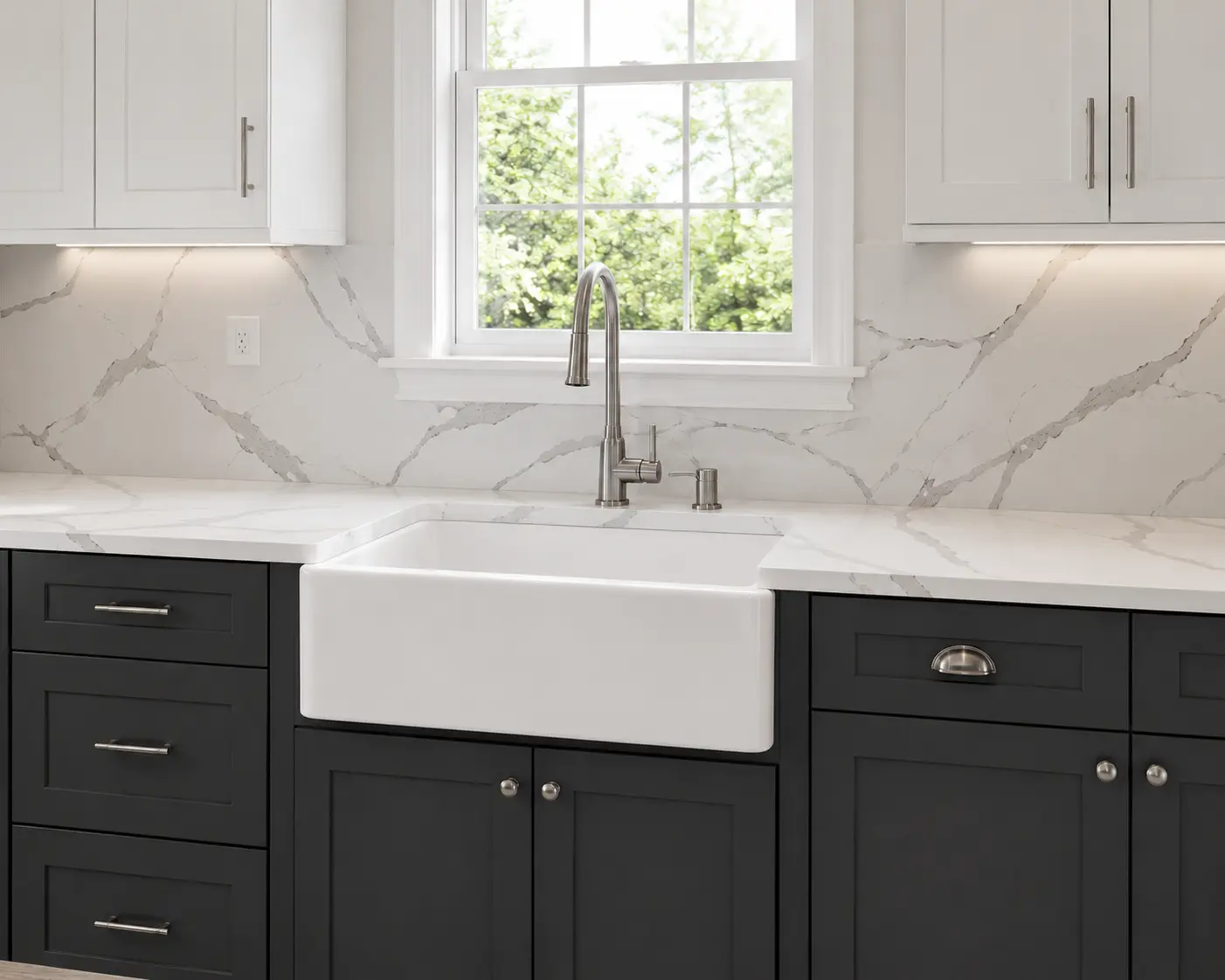
If you’re designing a farmhouse, transitional, or modern urban kitchen, few features create more visual impact than a fireclay apron-front sink, commonly known as a farmhouse sink.
Unlike a traditional undermount sink, a farmhouse sink features an exposed front apron that becomes part of the kitchen’s design rather than being hidden behind the cabinet.
This exposed white front creates beautiful contrast against darker cabinetry and adds depth and dimension to the entire kitchen.
One of today’s most popular combinations is:
- Charcoal grey shaker base cabinets
- White shaker upper cabinets
- White quartz countertops with soft grey veining
- A white fireclay apron-front sink
The white apron creates a striking focal point that works beautifully in both classic farmhouse kitchens and many contemporary urban homes.
Beyond their appearance, fireclay sinks are also highly resistant to staining and easy to clean thanks to their smooth glazed finish.
Because fireclay sinks are considerably heavier than stainless steel sinks, the sink cabinet should always be properly reinforced before installation.
Best for
- Farmhouse kitchens
- Transitional kitchens
- Modern urban homes
- Luxury kitchen renovations
- Homeowners wanting a timeless statement piece
Popular Kitchen Sink Brands in Canada
Several manufacturers produce excellent kitchen sinks, but three brands consistently remain among the most recognized and widely specified in Canada:
Each manufacturer offers multiple product lines designed for different budgets, ranging from entry-level stainless steel sinks to premium granite composite and fireclay collections.
Rather than choosing a sink based solely on the brand name, it’s worth comparing features such as:
- Sink material
- Steel gauge (16-gauge vs. 18-gauge)
- Sound insulation
- Corner radius
- Bowl configuration
- Drain placement
- Warranty
- Included accessories
These features generally have a much greater impact on everyday performance than the logo stamped on the sink.
If you’re still wondering how to choose a kitchen sink, focus on your daily habits rather than simply following trends. The best sink is the one that fits the way you cook, clean, and use your kitchen.
Final Thoughts from Years of Kitchen Design
The “best” kitchen sink isn’t the most expensive or most stylish one — it’s the one that matches how you actually cook, clean, and live in your kitchen day to day. Before you decide, think through your real daily habits: Do you wash produce separately? Do you hate cleaning around a drain? Do you want a modern single-bowl look, or the practicality of two? Answering those questions honestly will point you to the right sink far more reliably than trends alone.
Choose Your Kitchen Sink With Expert Guidance
At Entire Cabinetry, we help homeowners across Canada and the United States — with local service throughout the Greater Toronto Area (GTA), Ontario — choose the right kitchen sink, cabinet, and countertop combination for their space and habits.
- Shop kitchen cabinets online
- Visit our GTA showroom to see sink configurations in person
- Book a free design consultation, in-showroom or online, with one of our designers
Most homeowners who choose an undermount kitchen sink also install a quartz countertop because it provides the solid edge required for proper undermount installation. If you’re still comparing countertop brands, read our guide to the Best Quartz Countertop Brands in Ontario to learn what “Caesarstone” really means and how to compare the leading manufacturers.
Frequently Asked Questions
Is a single bowl or double bowl kitchen sink better? It depends on your habits. Double bowl sinks are better for separating tasks (like washing produce vs. dishes) and avoid drainage buildup issues, while single bowl sinks offer a more modern, minimalist look and more open space for large pots and pans.
Are undermount sinks better than top mount sinks? For stone or solid-surface countertops, undermount sinks are almost always preferred — about 99% of renovations use them — since they offer a cleaner look and easier countertop wipe-down. Top mount sinks are typically reserved for laminate countertops.
What size kitchen sink fits a standard base cabinet? Your sink should be roughly 1½” to 2″ narrower than your base cabinet’s exterior width, since the interior cabinet opening runs about 1.5″ smaller than the outside measurement.
Do I need a drain strainer in my kitchen sink? Yes — a drain strainer catches food waste before it enters your plumbing, significantly reducing clogs compared to a sink without one.